

Protecting your hair while you sleep is one of the simplest things you can do to prevent breakage, frizz, and tangled messes. Think about it—every night, your hair deals with friction, moisture loss, and tension from tossing and turning. Over time, this can weaken the hair shaft and lead to split ends. It’s similar to how a good self-care routine can prevent stress from piling up; small habits make a big difference. The good news is that small changes, like switching to a silk pillowcase, using a loose braid, or wrapping your hair in a satin bonnet, can make a huge difference in how your hair looks and feels each morning. Whether you’re trying to figure out how to sleep with curly hair or just keep your straight hair smooth, these tips have you covered.
Why Hair Protection During Sleep Matters
Have you ever wondered what actually happens to your hair while you’re asleep? It’s not just resting. The main culprit is friction. When you toss and turn, your hair rubs against your pillowcase. Cotton, a common pillowcase material, has a rough texture that grabs and lifts the hair’s outer layer, known as the cuticle. This roughs up the keratin structure, leading to frizz, tangles, and breakage.
Moisture loss is another issue. Cotton is very absorbent and pulls moisture and natural oils right out of your hair, leaving it dry and brittle by morning. This is especially true if you go to bed with damp hair, which is in its most fragile state. The tension from tight hairstyles can also lead to a condition called traction alopecia, where the hair follicles are constantly pulled, causing hair to weaken and fall out.
Common Signs of Sleep-Related Hair Damage
Not sure if your sleep habits are the problem? Here are a few signs to look for:
- More Strands on Your Pillow: Finding a few stray hairs is normal, but an increase can signal breakage.
- Morning Tangles: Waking up with knots, especially at the nape of your neck, is a clear sign of friction.
- Increased Frizz: If your hair looks significantly frizzier in the morning, your pillowcase is likely roughing up the cuticle.
- One-Sided Breakage: If you’re a side sleeper, you might notice more split ends or shorter, broken hairs on the side you sleep on.
- Dry, Brittle Ends: Hair that feels like straw in the morning is likely losing moisture overnight.
1. Switch to a Silk or Satin Pillowcase
This is probably the single most effective change you can make. Silk and satin create a smooth, almost frictionless surface for your hair to glide over. This means less tangling and less damage to the hair cuticle. Unlike cotton, these materials don’t absorb your hair’s natural oils, helping it stay moisturized through the night.
When you’re shopping, look for a pillowcase made from 100% mulberry silk with a momme weight of at least 19, preferably 22, for good durability. For satin, a thread count of 300 or higher is a good benchmark. Just remember to wash them in cold water with a gentle detergent to keep them in great shape.
2. Use a Silk Bonnet or Satin Scarf
A bonnet or scarf acts like a protective shield, keeping your hair contained and completely safe from friction. This is a fantastic option for those with curly hair, natural textures, braids, or extensions, as it keeps styles intact and frizz-free.

To use a scarf, fold it into a triangle and tie it at the nape of your neck. With a bonnet, just slip it on and make sure all your hair, including those little baby hairs, is tucked inside. Bonnets are especially great if you move around a lot in your sleep because they tend to stay put better than scarves. For ultimate protection, you can even use a bonnet and a silk pillowcase.
How to Choose Between a Pillowcase and a Bonnet
So, which one is right for you?
- Pillowcases are great for everyone and offer skin benefits, too, by reducing sleep creases. They’re perfect if you want a simple solution that protects both hair and skin, especially if you’re maintaining a consistent skin care routine at night
- Bonnets are better suited for those with very long or thick hair, protective styles, or curls that need to be preserved. They are also ideal for side or stomach sleepers.
Ultimately, it comes down to personal preference. Some people, myself included, use both for maximum effect.
3. Try Protective Hairstyles for Sleeping
Securing your hair in a loose style prevents it from getting tangled and pulled as you move. The key word here is loose—you never want to create tension on your scalp.
Here are a few simple and effective options:
- Loose Braid: A single braid down your back works for most hair lengths and even creates soft waves for the morning. This is a great example of how to tie hair while sleeping for hair growth because it prevents breakage that can stall length retention.
- The “Pineapple”: If you have curly hair, this is for you. Gather your hair into a very high, loose ponytail on top of your head so your curls aren’t crushed while you sleep.
- Low Ponytail or Bun: A loose bun or ponytail at the nape of your neck, secured with a soft scrunchie, keeps hair contained without any strain.
- Two-Strand Twists: A great option for coily or natural hair to keep it stretched and protected.
Hairstyles to Avoid at Night
Just as some styles protect, others can cause serious damage. Steer clear of:
- Tight Ponytails or Buns: These create too much tension and can cause breakage right at the hair tie.
- Metal or Plastic Clips: These can snag and break strands.
- Regular Elastic Bands: The friction and tightness can easily snap hair.
If a style feels like it’s pulling or is uncomfortable in any way, it’s too tight for sleep.
4. Use the Right Hair Ties and Accessories
The accessories you use are just as important as the hairstyle itself. Traditional elastic hair ties are a major cause of breakage. The seam on the elastic snags hair, and the tightness creates a pressure point.
Instead, opt for silk or satin scrunchies. Their smooth surface reduces friction, and they distribute pressure more evenly. Another gentle option is the spiral or coil hair tie, which holds hair securely without creating a harsh line or causing tension. When choosing a scrunchie, make sure the elastic inside isn’t overly tight.
5. Keep Hair Dry Before Bed
Going to bed with wet hair is one of the worst things you can do. When hair is wet, its protein bonds are weakened, making it incredibly elastic and fragile. The combination of wetness and friction against your pillow is a recipe for snapping and stretching. If you absolutely must sleep with damp hair, it’s crucial to know how to sleep with wet hair safely by loosely braiding it and using a silk pillowcase.
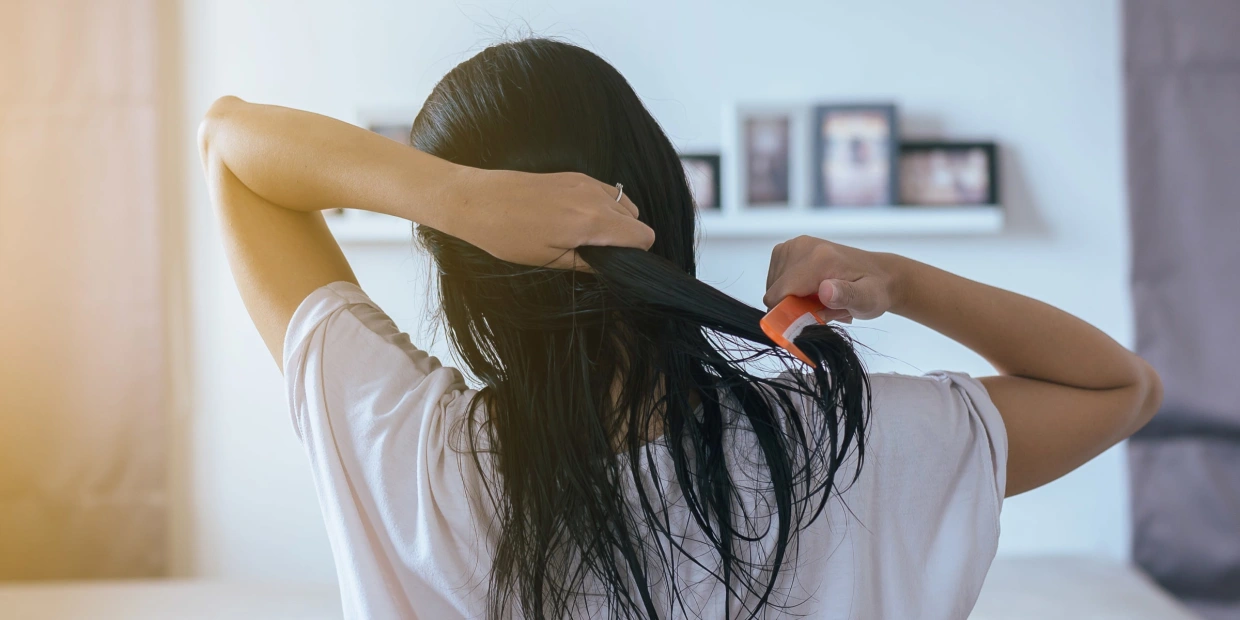
The best approach is to wash your hair earlier in the evening to give it time to dry.
- Air Drying: This is the gentlest method. It can take 2-3 hours depending on your hair’s thickness.
- Microfiber Towel: Gently squeeze, don’t rub, your hair with a microfiber towel or an old t-shirt to absorb excess water without causing frizz.
- Blow Drying: If you’re short on time, use a blow dryer on a medium heat setting and always apply a heat protectant first.
6. Detangle Hair Before Sleeping
Jumping into bed with tangled hair only makes things worse overnight. Those small knots can turn into bigger, more stubborn tangles that you’ll have to rip through in the morning.
Take a minute to gently detangle your hair before bed. Use a wide-tooth comb or a detangling brush, starting from the ends and working your way up to the roots. This prevents you from pulling on knots and causing breakage. Holding each section as you brush can also reduce strain on your scalp. A little leave-in conditioner or detangling spray can add slip and make the process even smoother.
7. Brush Hair Gently Before Bed
While detangling removes knots, a gentle brushing session does something more. For those with straight or wavy hair, brushing with a soft bristle brush, like a boar bristle brush, helps distribute the natural oils from your scalp down the hair shaft. This is your body’s own natural conditioner, and it helps keep your hair moisturized and protected overnight. If you have very curly hair, you might want to stick with finger detangling or a wide-tooth comb to avoid disrupting your curl pattern.
8. Apply Leave-In Conditioner or Hair Serum
A small amount of a leave-in product can provide an extra layer of moisture and protection. It helps seal the cuticle, reducing friction and preventing moisture loss.
- For fine or thin hair: Look for a lightweight, water-based spray that won’t weigh your hair down.
- For thick or dry hair: You can use a richer cream or a few drops of a nourishing oil like argan or jojoba oil.
Apply a small amount from the mid-lengths to the ends, avoiding the roots so your hair doesn’t get greasy. A quick way to test your hair porosity is to place a clean strand in a glass of water—if it floats, you have low porosity and should use lighter products. If it sinks, you have high porosity and can handle heavier moisturizers.
9. Maintain an Optimal Bedroom Environment
Your bedroom’s environment can also affect your hair. Central heating and dry climates can zap moisture from the air, and in turn, from your hair. Using a humidifier can help restore a healthy moisture balance (around 40-50% humidity is ideal), preventing your hair from becoming dry and static-prone. Also, try to keep your room at a comfortable, cool temperature to avoid sweating, which can make your hair damp and more vulnerable. If you’re someone who wonders about the best sleep position for minimizing hair damage, sleeping on your back is ideal.
10. Create a Consistent Nighttime Hair Routine
Consistency is what brings results. You don’t need a complicated routine, just a few simple steps that you follow every night.
Here’s a simple checklist to get you started:
- Ensure hair is dry.
- Detangle gently with a wide-tooth comb.
- Apply a small amount of leave-in conditioner or serum to the ends.
- Style in a loose braid, bun, or pineapple.
- Secure with a silk or satin scrunchie.
- Sleep on a silk/satin pillowcase or with hair in a bonnet.
Adjusting Routines for Different Hair Types
- Curly & Natural Hair: Focus on moisture. Bonnets, pineapples, and two-strand twists are your best friends.
- Long Hair: The main goal is to prevent tangles. A long, loose braid is a perfect choice.
- Fine or Thin Hair: Use minimal product and opt for very loose styles. A silk pillowcase is often better than a bonnet, which can sometimes feel heavy. If you wonder how to sleep with short hair that’s also fine, a silk pillowcase is usually all you need.
- Straight Hair: To maintain a smooth finish, check out these tips on how to keep hair straight overnight. A loose wrap or simply sleeping with it down on a silk pillowcase works well.
By incorporating these small habits, you’ll be on your way to waking up with healthier, happier hair every morning. If you’re looking for more wellness tips, feel free to explore more on my blog at www.notonetype.org.

Có thể bạn quan tâm
How to Sleep With Wet Hair: Tips to Protect Your Strands Overnight
Washing your hair at night saves time in the morning, but going to bed with...
Dec
How to Sleep with Wavy Hair: 7 Ways to Preserve Your Waves
Sleeping with wavy hair can feel like a nightly gamble. You go to bed with...
Dec
How to Get Wavy Hair Overnight Short Hair: 8 Easy Heatless Methods
Getting wavy hair overnight with short hair is easier than you might think, and you...
Dec
How to Sleep With Short Hair: Tips to Wake Up With Beautiful, Damage-Free Hair
Sleeping with short hair can feel like a nightly gamble. You go to bed with...
Dec
How to Keep Hair Straight Overnight: 10 Easy Methods That Work
It’s a familiar story. You spend precious time carefully flat-ironing your hair until it’s perfectly...
Dec
How to Sleep with Curly Hair Without a Bonnet: (8 Easy Ways)
Protecting your curls overnight doesn’t have to mean wearing a bonnet. Maybe you find them...
Dec