
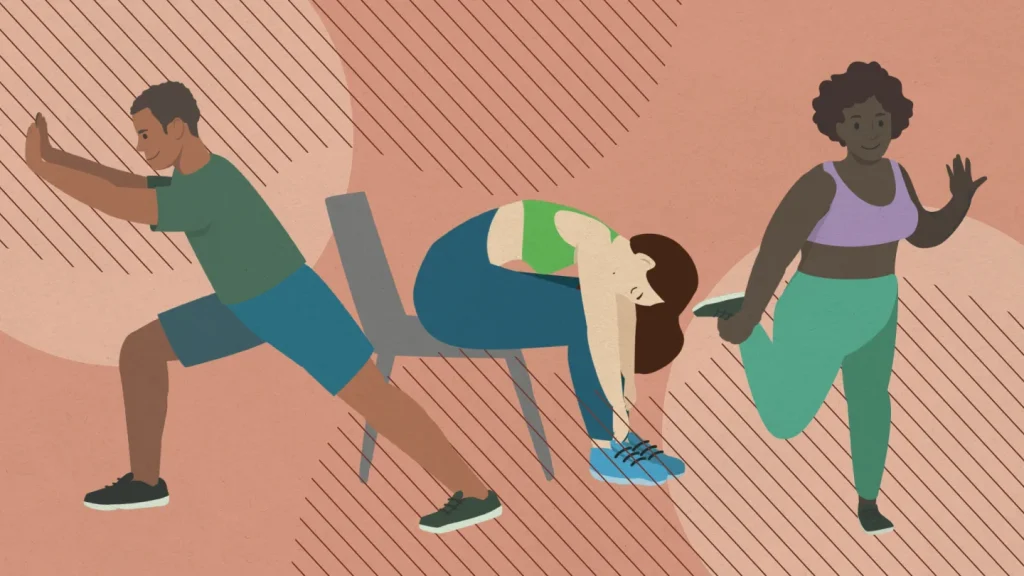
Standing for hours on end is tough on the body. Whether you’re a nurse, a barista, a retail associate, or anyone whose job keeps them on their feet, you know the feeling: the aching arches, the tired calves, and that persistent throb in your lower back. It’s more than just discomfort; it’s a daily grind that can impact your well-being. But what if you could fight back with a few simple moves? Adding targeted stretches into your day is a straightforward way to ease that tension, improve circulation, and protect your body from long-term strain. Think of it as a small investment that pays huge dividends in comfort and health, making your workday feel much more manageable. Making this a part of a consistent daily stretching routine can be a game-changer.
Why Does Standing All Day Cause Pain and Discomfort?
Our bodies are designed for movement. When you stand in one place for too long, you’re essentially asking your muscles to hold a static, tense position. This reduces blood flow, particularly in your lower legs, causing fluid to pool and leading to swelling and fatigue. Unlike walking, where muscles contract and relax to pump blood back to the heart, standing still puts constant pressure on the same muscle groups and joints.
This prolonged pressure can lead to common issues for standing workers, including plantar fasciitis (a sharp heel pain), varicose veins, and chronic lower back strain. Your body’s entire kinetic chain is affected, starting from the ground up.

Impact on Feet and Ankles
Your feet bear the entire weight of your body, and when you stand for hours, the impact is significant. The plantar fascia, the thick band of tissue on the bottom of your foot, gets overstretched and inflamed, causing that signature stabbing pain near the heel. Your ankles can become stiff and swollen as fluid accumulates due to poor circulation, and the Achilles tendon can tighten, further limiting mobility.
Effects on Legs and Lower Back
When your feet and ankles are fatigued, your body tries to compensate. This often means your calf muscles, hamstrings, and hip flexors become incredibly tight. This tightness pulls on your pelvis, tilting it out of alignment and placing a heavy load on your lower back. The result is often a dull, persistent ache that’s hard to shake. This is a classic example of how an issue in one part of the body creates a ripple effect of discomfort elsewhere.
Best Lower Body Stretches for Standing Workers
To combat the effects of standing, you need to focus on the entire lower body. These stretches are simple, require no special equipment, and can be easily incorporated into your workday. They target the key muscles that take a beating from being on your feet.
Standing Calf Stretch (Wall Stretch)
This is one of the most important stretches for standing all day. Tight calves are a primary cause of foot problems like plantar fasciitis.
- Stand facing a wall, about an arm’s length away.
- Place your hands on the wall for support.
- Step one foot back, keeping that leg straight with your heel flat on the floor.
- Gently bend your front knee until you feel a stretch in the calf of your back leg.
- Hold for 20-30 seconds. Don’t bounce.
- Repeat 3 times on each leg.
Heel Raises
Heel raises strengthen your calf muscles and improve ankle stability, which helps support your feet and improve blood circulation.
- Stand with your feet flat on the floor, holding onto a counter or chair for balance if needed.
- Slowly rise up onto the balls of your feet, lifting your heels as high as you can.
- Hold for a moment at the top, then slowly lower your heels back down.
- Aim for 3 sets of 10-15 repetitions.
Ankle Circles and Ankle Pumps
These simple movements are fantastic for reducing swelling and keeping your ankle joints mobile.
- While sitting or standing, lift one foot slightly off the ground.
- Slowly rotate your ankle in a circle 15 times in one direction, then 15 times in the other.
- Next, “pump” your ankle by pointing your toes down and then flexing them up toward your shin. Repeat 15 times.
- Switch to the other foot.
Standing Quad Stretch
Stretching the large muscles on the front of your thighs (quadriceps) helps keep your pelvis properly aligned, taking pressure off your lower back.
- Stand straight, holding onto a wall or chair for balance.
- Grab your right foot and gently pull your heel toward your glute.
- Keep your knees together and press your hips slightly forward to deepen the stretch.
- Hold for 15-30 seconds, then switch legs. Repeat 3 times on each side.
Standing Hamstring Stretch (Forward Fold)
Tight hamstrings are a major contributor to lower back pain. This stretch helps lengthen them.
- Stand with your feet hip-width apart and a slight bend in your knees.
- Hinge forward from your hips, keeping your back straight.
- Let your head hang heavy and rest your hands on your shins, ankles, or the floor, depending on your flexibility.
- Hold for 30 seconds, feeling the stretch along the back of your legs.
Hip Flexor Stretch (Low Lunge)
Your hip flexors, located at the front of your hips, get tight from prolonged standing. Releasing them can provide instant relief for your lower back.
- Step one foot forward into a lunge position, keeping your back straight.
- Gently press your hips forward until you feel a stretch in the front of your back hip.
- For a deeper stretch, raise the arm on the same side as your back leg straight up.
- Hold for 30 seconds and repeat on the other side.
Pigeon Pose (Standing or Seated Modification)
This pose is excellent for releasing deep tension in the glutes and hips, which can sometimes pinch the sciatic nerve.
- Seated: Sit in a chair with your feet flat on the floor. Cross your right ankle over your left knee.
- Gently press down on your right knee to feel a stretch in your right glute and hip.
- To deepen it, lean forward with a straight back.
- Hold for 30 seconds, then switch sides.
Essential Foot and Ankle Stretches
Don’t forget to give your feet some direct attention. Healthy feet are the foundation of a comfortable body during a long shift.
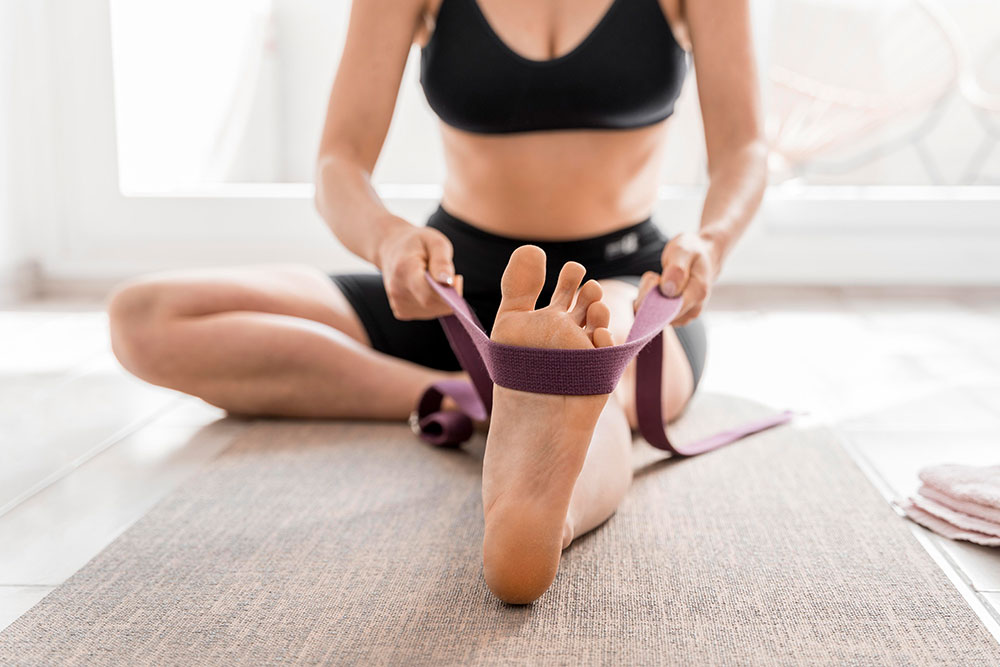
Toe Curls and Toe Spread
These exercises strengthen the small, intrinsic muscles in your feet that support your arches.
- Toe Curls: While seated, place a small towel on the floor and use your toes to scrunch it toward you.
- Toe Spread: Try to spread your toes as wide apart as possible. Hold for a few seconds, then relax. Repeat 10 times.
Toe Squat (Kneeling Toe Stretch)
This stretch provides an intense release for the plantar fascia. It can be uncomfortable at first, so start slowly.
- Kneel on the floor with your toes tucked under your feet.
- Slowly sit back on your heels.
- Hold for 20-30 seconds, building up to a minute as you get more comfortable.
Ankle Stretch (Top of Foot)
This stretch relieves pressure on the top of the foot, often caused by tight shoes.
- Kneel on the floor with the tops of your feet flat on the ground.
- Gently lean back to feel a stretch along your shins and the top of your ankles.
- Hold for 20-30 seconds.
Upper Body and Back Stretches for Standing Posture
Poor posture can develop when you’re tired from standing. These stretches counteract slouching and relieve upper body tension.
Neck Stretches (Side Tilts and Chin Tucks)
- Side Tilt: Gently tilt your right ear toward your right shoulder. Hold for 20 seconds. Repeat on the left side.
- Chin Tuck: Gently lower your chin to your chest. Hold for 20 seconds.
Shoulder Shrugs and Rolls
Release tension in your upper back and neck by shrugging your shoulders up to your ears, holding for a moment, and then dropping them. Follow with 5-10 slow shoulder rolls backward and forward.
Chest Stretch (Doorway or Behind Back)
Opening up your chest helps correct rounded shoulders.
- Doorway: Place your forearms on either side of a doorway, elbows slightly below shoulder height. Step forward until you feel a stretch across your chest.
- Behind Back: Clasp your hands behind your lower back and straighten your arms, puffing your chest out.
- Hold for 30 seconds.
Upper Back Stretch (Cat Stretch)
Interlace your fingers and press your palms away from you, rounding your upper back like a cat. This stretches the muscles between your shoulder blades. Hold for 20-30 seconds.
Side Reach Stretch
Stand with your feet hip-width apart. Reach one arm overhead and gently bend to the opposite side, feeling a stretch all along your side body. Hold for 20 seconds per side.
Quick Stretching Routines for Different Times of Day
Consistency is key. Here’s how you can fit these stretches into your day.
Pre-Work Morning Routine (5-7 minutes)
Prepare your body for the day ahead to prevent injury.
- Standing Calf Stretch
- Ankle Circles
- Standing Hamstring Stretch
- Hip Flexor Stretch
- Shoulder Rolls
Mid-Shift Break Routine (3-5 minutes)
Combat fatigue and stiffness during your break. These short bursts of movement can also serve as a great workout to boost energy.
- Heel Raises
- Standing Quad Stretch
- Neck Stretches
- Chest Stretch
Post-Work Recovery Routine (10-12 minutes)
Help your body recover and release accumulated tension.
- Toe Squat
- Seated Pigeon Pose
- Reclined Hamstring Stretch (lying on your back)
- Elevate your feet against a wall for 5-10 minutes to reduce swelling.
How Often and How Long Should You Stretch?
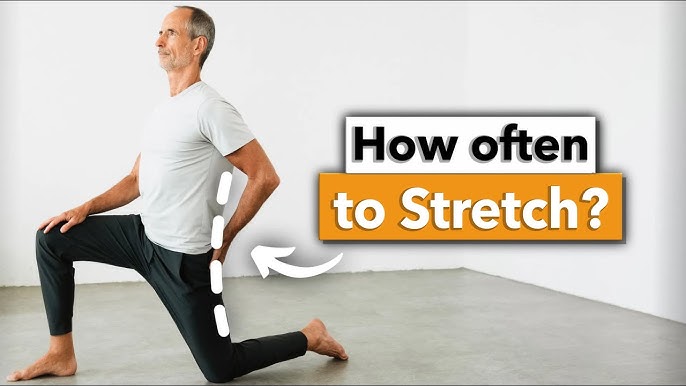
For the best results, aim to incorporate short stretching breaks every 30-60 minutes throughout your shift. According to health organizations like Harvard Health, holding a static stretch for 15-30 seconds and repeating it 2-3 times is effective. The goal is to feel a gentle pull, never pain. Daily stretching is ideal for those who stand all day, as it addresses muscle tension before it becomes chronic.
Additional Tips for Standing All Day Comfort
Stretching is powerful, but it’s even more effective when combined with other smart habits.
Choosing the Right Footwear
Your shoes are your foundation. Look for footwear with excellent cushioning, good arch support, and a wide toe box that allows your toes to spread naturally. Regularly replacing worn-out work shoes is a must.
Using Anti-Fatigue Mats and Supports
If your workplace allows it, an anti-fatigue mat can make a world of difference. These mats provide a cushioned surface that encourages subtle movements in your leg muscles, which promotes blood flow and reduces joint stress. Compression socks can also be very helpful for reducing swelling and fatigue.
What are the Warning Signs You Need More Than Stretches?
While stretching can relieve a lot of discomfort, certain symptoms warrant a visit to a doctor. If you experience any of the following, please seek professional medical advice:
- Severe or worsening pain that doesn’t improve with rest.
- Swelling in your legs or feet that doesn’t go down overnight.
- Numbness, tingling, or a “pins and needles” sensation.
- Sharp, shooting pains.
- Pain that disrupts your sleep or daily activities.
These could be signs of more serious conditions like stress fractures, nerve compression, or severe plantar fasciitis that require a proper diagnosis and treatment plan.
Taking a few minutes each day to care for your body isn’t a luxury; it’s a necessity for anyone with a standing job. By incorporating these simple stretches for standing all day, you can reduce pain, prevent injury, and feel stronger and more comfortable both at work and at home. Listen to your body, stay consistent, and remember that small, daily actions create lasting relief. For more tips on building a healthy routine, explore the resources at Not One Type.

Có thể bạn quan tâm
Daily Stretching Routine: Complete Guide for Better Flexibility
A daily stretching routine is one of the simplest and most powerful habits you can...
Dec
Workout Boost Energy: 7 Best Exercises to Increase Vitality
Despite the common assumption that exercise depletes energy, research consistently shows the opposite: strategic workouts...
Dec
Stair Workout Guide: 15+ Exercises for All Fitness Levels
Stair workouts offer one of the most accessible and effective forms of exercise you can...
Dec
How Working Out Improves Your Mood?
Some days, just getting out of bed feels like a win. On those days, the...
Nov
How to Motivate Yourself to Workout in the Morning (11 Proven Strategies)
Getting out of bed for a morning workout can feel nearly impossible, especially when your...
Nov
How to Motivate Yourself to Workout Alone: 15 Proven Strategies That Work
Let’s be honest: mustering the energy to work out is tough enough. But doing it...
Nov